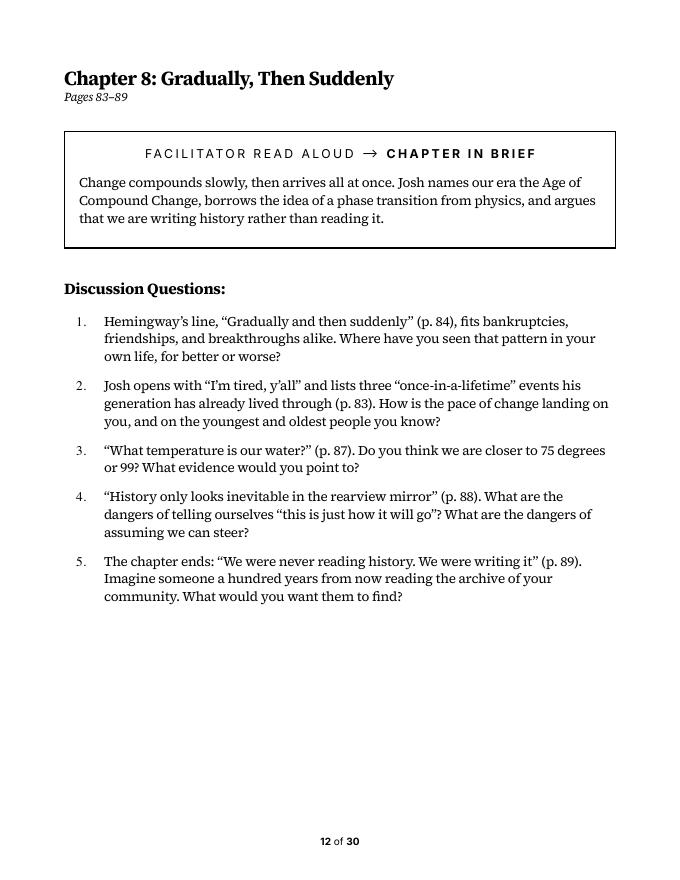
Chapter 8: Gradually, Then Suddenly
Pages 83–89
Facilitator read aloud → Chapter in brief
Change often compounds slowly, then arrives all at once. Josh names our era the Age of Compound Change, borrows the idea of a phase transition from physics, and argues that we are writing history rather than reading it.
Discussion Questions:
- Hemingway’s line, “Gradually and then suddenly” (p. 84), fits bankruptcies, friendships, and breakthroughs alike. Where have you seen that pattern in your own life, for better or worse?
- Josh opens with “I’m tired, y’all” and lists three “once-in-a-lifetime” events his generation has already lived through (p. 83). How is the pace of change landing on you? How do you see it landing on the youngest and oldest people you know?
- “What temperature is our water?” (p. 87). Do you think we are closer to 75 degrees or 99? What evidence would you point to?
- “History only looks inevitable in the rearview mirror” (p. 88). What are the dangers of telling ourselves “this is just how it will go”? What are the dangers of assuming we can steer?
- The chapter ends: “We were never reading history. We were writing it” (p. 89). Imagine someone a hundred years from now reading about the life of your community. What would you want them to read?